• This email address is being protected from spambots. You need JavaScript enabled to view it.
Photo Gallery

The story goes that when the sailor João Gonçalves Zarco discovered Câmara de Lobos, he was astonished at the number of sea lions he found, which led him to name the county as he did (chamber of sea lions).

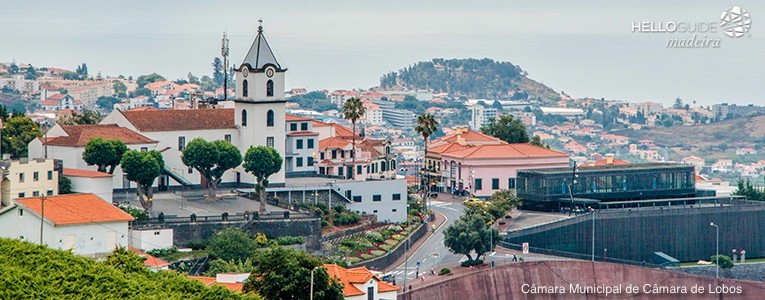
In the centre of the town, the São Sebastião church, built in the 16th century and restored in the 17th and 18th centuries, boasts an intricate gilded altar which is well worth visiting.

Also worth visiting is the Convent of São Bernardino de Sena, of the Friars Minor Order, which had its origin in an oratory founded around the middle of the 15th century. This temple has the distinction of having hosted the saint Friar Pedro da Guarda, and Mary Jane Wilson, a figure of great importance to the island.

The Forno da Cal (Lime Kiln), situated in Sítio da Trincheira and considered one of main legacies of industrial limestone archaeology in Madeira is another place to visit. It was built in 1874 and continued working up to 1960. The council purchased the space in 1983, where it ran a cat fish drying industry. Currently the kiln is part of the seafront project of Câmara de Lobos, which includes the Salinas and all of the Trincheira area. In the centre of the town is the modern Museu da Imprensa (Press Museum) of Madeira, showcasing a significant collection of machines from different printers in the region. Nearby you will find the Henriques & Henriques Wine Cellar of the Henriques family which is one of the great wineries of the island.

Other points of interest:

Pavilion

Built in 1883, the cast iron Municipal Pavilion is a relic of the past with 12 columns standing in the Autonomia Square in the centre of Câmara de Lobos.

Caldeira Convent

This church was founded on the 16th of April 1931 by a group of women of the faith, and it can be seen in Caldeira. The monastery survives thanks to the work of the nuns, namely by making communion wafers and doing manual work.

Chapel of Nossa Senhora da Conceição

Founded in the late 15th century, the Chapel of Nossa Senhora da Conceição – located in the Câmara de Lobos town centre and classed as a Chapel of Regional Cultural Value – displays works of the highest standard and paintings by Bernes. There. 17 works by Nicolau Ferreira and Bernes are displayed.

Carmo Church

As one of the three parishes of Câmara de Lobos, the Carmo church is located in the place with the same name and dates back to 1962.

Church of Santa Cecília

A recent construction, from 2007, the Parish Complex of Santa Cecília in Câmara de Lobos is a project by the architect Jorge Luis Santos.

São Cândido

Chapel Situated on the site of Caminho Grandes e Preces, in Fonte da Rocha, parish of Câmara de Lobos, the S. Cândido chapel was founded in 1732.

Nossa Senhora da Piedade Chapel

The Nossa Senhora da Piedade chapel in the parish of Câmara de Lobos is located in Caldeira and its construction was commissioned in 1771.

Anyone looking over Curral das Dreiras from the lookout points of Boca da Corrida or Eira do Serrado will easily appreciate the depth of the valley where the parish is set, as if it was the crater of a volcano. The Curral das Freiras (Valley of the Nuns) has that name because of a community of Nuns who, in 1560, took shelter there when fleeing from French Lutheran privateers who invaded the island and ransacked the city of Funchal.

Thanks to its location in the depth of the valley, surrounded by huge mountains, this parish, whose economy is based on agriculture – mainly Chestnut production – Curral das Freiras is host to a large harvest festival held in November. Another activity is small business.

The Church of Nossa Senhora do Livramento is the only historical heritage site of Curral das Freiras. It was built in the 19th century and underwent some important work in the 20th century, when the side altars in honour of Our Lady of Deliverance and the Sacred Heart of Jesus were built, as well as the high altar of the church.

Enjoy the natural beauty of Curral das Freiras and don't forget to stop by the Eira do Serrado lookout point, at an altitude of 1095 metres, to admire the beautiful panoramic views.

This parish can be accessed from Funchal.

It is impossible not to mention wine production when talking about Estreito de Câmara de Lobos. This agricultural parish is an important commercial centre and is responsible for growing a large proportion of the grapes used in the production of the famous Madeira wine. The importance of winemaking is such that the parish was a headline act at the Wine Harvest Festival which extends also to Funchal.

Estreito has several hotels and restaurants, sought after by many who want to try the regional skewered meat.

The historical heritage of the Estreito de Câmara de Lobos parish includes the Nossa Senhora da Graça church, built in the 18th century and boasting great architecture, including the chapel and the main body, painted in blue and gold. The shrine is gilded and the chapel has beautiful paintings by João António Villavicêncio from the 18th century.

Other points of interest:

The chapel of Santo António, commissioned by José de Brito to replace an existing chapel which was built in 1705 and was in a poor state.

The chapel of Santa Ana which was built in 1768 and rebuilt in the mid-twentieth century. The chapel is very basic; it has only some steps for the altar and the basin for the holy water, as well as a canvas showing Santa Ana teaching her daughter.

Nossa Senhora da Encarnação Chapel. This temple dates back to 1671, when the scion John João José de Ornelas Cabral had it built.

The Church of Garachico or Church of Nossa Senhora Bom Sucesso was built in 1963 in the same place where there was a chapel dating back to 1777.

The Calvário Chapel was built to celebrate Via Sacra, the height of Lent.

The Civic Centre of Estreito, in the heart of the parish, is a multipurpose space that is used for concerts, plays, exhibitions, and conferences.

In Estreito market the aromas and variety of farm products are an attraction in themselves. On Sunday mornings, this place fills up with people from various parts of the island.

Another point of interest of this place is Levada do Norte, a very popular footpath which can be accessed from Calvário, just beyond the Church of Nossa Senhora da Graça.

They call it the land of the cherry, but Jardim da Serra has many more attractions. Home to humble and friendly people, this beautiful parish is a natural amphitheatre. In April, the hilly landscape is dressed in white with the first flowers of the large cherry field. Then in June, the cherry picking gives way to a party in honour of this fruit, an event that unites the efforts of entire local community.

In this lush green setting, walks are definitely in order. The parish is sought after daily thanks to its fantastic walks and landscapes that amaze tourists.

Indulge in the magnificence of nature from the Boca dos Namorados lookout point, with a panoramic view of Curral das Freiras, where you can enjoy the scent of eucalyptus, the beauty of wildflowers, and make use of the outdoor barbecues. Nearby one can make use of the services of the 'Escapada dos Cavaleiros' ('Escapade of the Knights') equestrian centre.

The Corrida lookout point is a recommended spot. From there you can see a breathtaking view, of Curral das Freiras, at an altitude of about 1000m or go on different marked out walks. Get well equipped!

If you get the chance, don't miss the 'Aquagem' waterfall. Located in Jardim da Serra, between Fonte Frade and Luzirão, the waterfall is approximately 49m high and is very beautiful. It is also accessible from Levada do Norte.

Other points of interest:

Quinta Jardim da Serra

Commissioned by Henry Veitch in the 19th century, one of the most influential consuls in Madeira, this estate has a beautiful garden and magnificent views over the Atlantic Ocean. Currently, this space has been converted into a hotel, whose activities benefit agriculture, giving guests the opportunity to savour natural products and connect with agriculture.

São Cristóvão Chapel

Located in Boca da Corrida, it was built in 1999 in honour of St. Christopher, patron saint of motorists who celebrate their patron there each year. Consolação Chapel Located in Fôro, its construction dates to 1684. The stonework of the main entrance and the cross are the only elements which remain from the original chapel. Celebrations are held on the 1st of November.

Jardim da Serra Church.

Built in 2009 to replace an old temple in the area, the Jardim da Serra Church is dedicated to Saint James.

Quinta Grande is located near the south coast of Madeira and has an area of 4.19 km².

The name of the parish is due to an extensive property owned by the Jesuits in that place. There, one can visit the parish church of Nossa Senhora dos Remédios, the Vera Cruz Chapel, and the Nossa Senhora de Fátima Chapel.

It is also the location of the highest lookout point in Europe and the second-highest in the world, Cabo Girão. Other lookout points include Quita do Pomar and Fajã dos Padres, accessible via a lift, and featuring a small beach, a restaurant, and rental accommodation.

To get to Quinta Grande from Funchal, travel up the highway towards Funchal and Ribeira Brava, following the signposts and exit at 'Quinta Grande'.

Make your reservation for your Madeira Tour

Webmoment - LDA

  • This email address is being protected from spambots. You need JavaScript enabled to view it.
  • Contact Us

Join Newsletter

By subscribing to our mailing list you will always be updated with the latest news.

Don't worry, we don't like spam!

Project Co-funded By